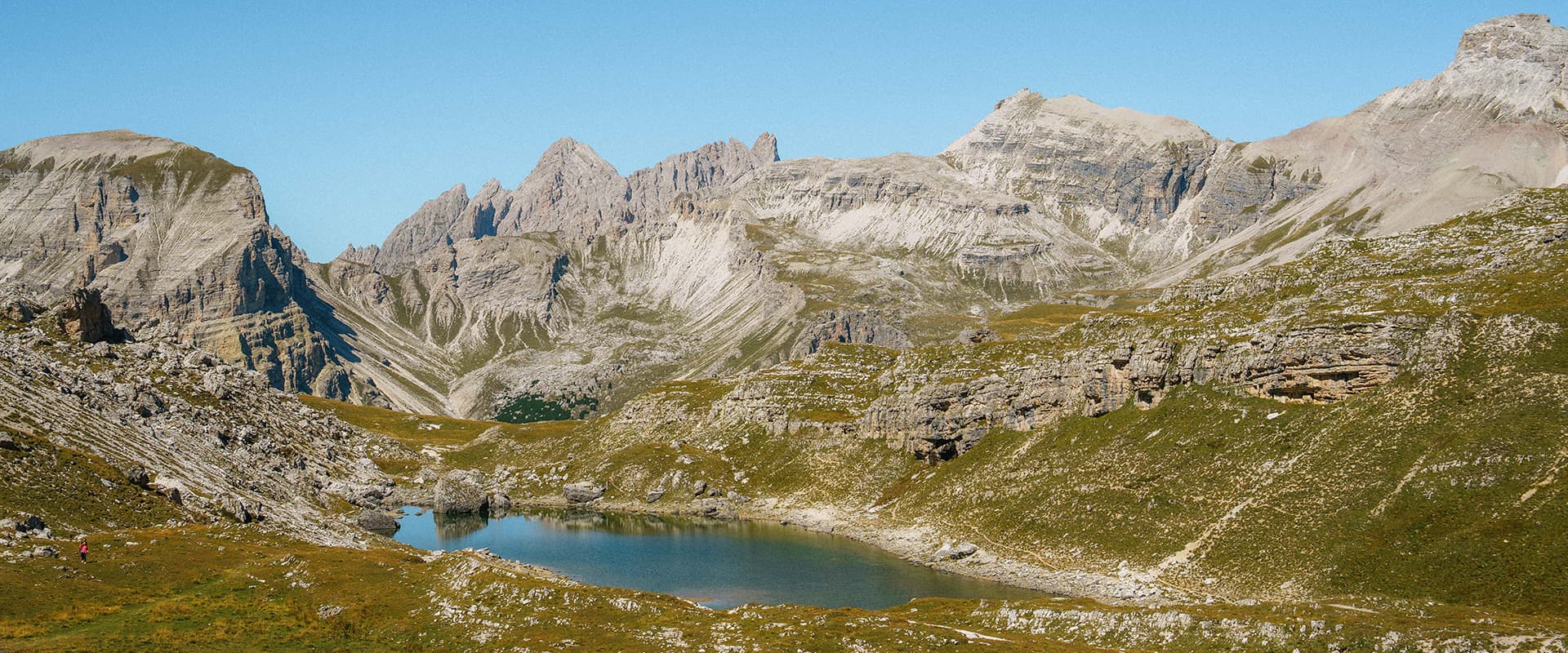
The Dolomites are one of those places where you can hike for days and still feel like you’ve only scratched the surface. Dramatic limestone peaks, green alpine meadows, mountain huts and high-altitude trails make this part of Italy a popular destination for hikers.
Hiking the Dolomites Ronda is a great way to experience a big part of this landscape in just five days. The route takes you through South Tyrol and Trentino, connecting different valleys, mountain ranges and villages along the way. What makes the Dolomites Ronda particularly interesting is that every stage comes with three options: easy, moderate and challenging. We chose the moderate route every day, which gave us a good balance between hiking time, elevation and scenery. But depending on your fitness level and experience, the weather conditions, or simply how your legs feel that morning, you can choose a different option.
If you’re looking for some of the best hiking trails in South Tyrol, the Dolomites Ronda is a great place to start. From the iconic Seiser Alm to the amazing peaks of Puez-Geisler and the mountain trails of Alta Badia, it brings together several of the region’s hiking highlights.
Here’s what our five days on the Dolomites Ronda in South Tyrol looked like.
Author
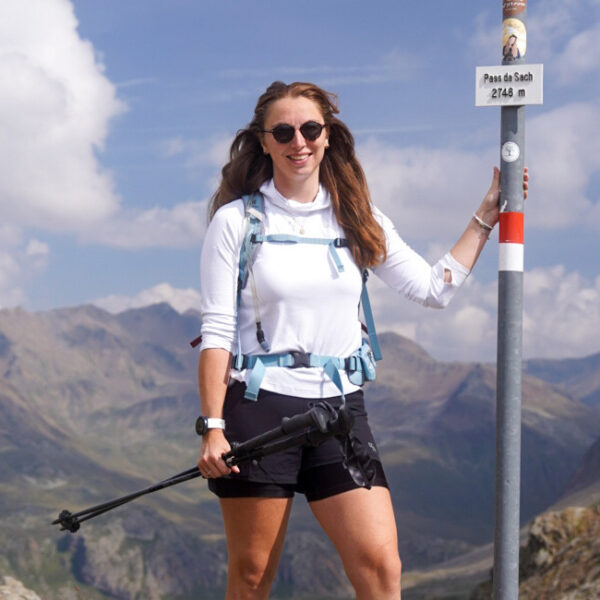
Joy Hadders
Joy Hadders is a Dutchie who takes full advantage of her free days off of work to experience as much as possible in other countries. Like many others, she found her way in hiking during the lockdown and now she’s also hooked! She enjoys discovering hidden gems with her boyfriend and dreams of a fully pinned world map. You can follow Joy on Instagram @joyhadders.
The first stage starts on the wide-open meadows of Seiser Alm, before climbing towards Plattkofel and the Fassa Joch. The landscape quickly changes from green alpine settings to rugged Dolomite scenery, with impressive views towards the surrounding peaks.
A highlight is the Friedrich August Trail, which follows the mountainside with panoramic views before eventually descending towards Val di Fassa.
There are three options for this stage. The easy route is 7 km, while the challenging route covers 14 km and includes significantly more elevation gain.
Stage 2: Puez-Geisler Nature Park
Passo Gardena – Colfosco
Moderate: 8 km | 3.5 hours | +400 m, -750 m
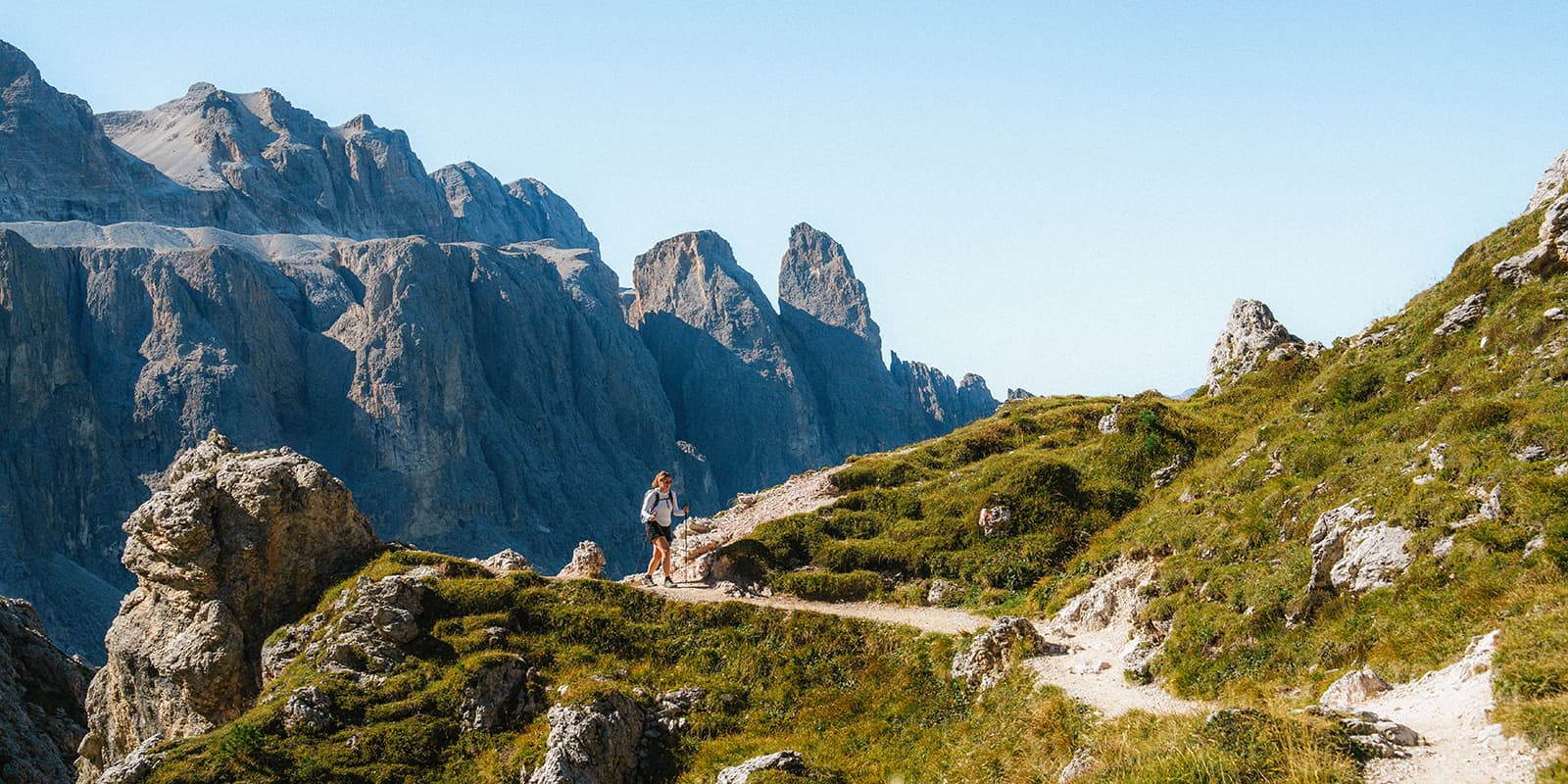
Stage two takes you into the amazing Puez-Geisler Nature Park, where the scenery becomes more rugged and rocky. Starting from higher altitude means you are quickly surrounded by some of the Dolomites’ most impressive peaks.
The moderate route is relatively short, but the descent makes it a proper mountain day. The challenging option adds considerably more distance and elevation for those looking for a bigger challenge.
Stage 3: The Heiligkreuzkofel Group in Val Badia
Abtei – San Cassiano
Moderate: 13 km | 5 hours | +600 m, -1.150 m
This was our longest day and one of the most varied. A cable car takes you up towards La Crusc, from where the trail climbs towards the Forcella de Medesc at 2.533 m.
From the pass, you descend through alpine landscapes towards San Cassiano, surrounded by the impressive walls of the Dolomites. With more than 1.000 m of descent, this stage will challenge your knees but the views are all worth it.
The easy option is only 7 km, while the challenging route is 17 km with 1.650 m of elevation gain.
Stage 4: In the heart of the Dolomites
Vallon – Passo Pordoi
Moderate: 7 km | 2 hours | +600 m, -900 m
After the longer third stage, day four is short but impressive. From Corvara, a cable car and chairlift take you high into the mountains towards the Boè Group.
The trail crosses rocky high-alpine terrain before reaching the area around Passo Pordoi. Along the way, you also pass the Totenburg war cemetery, a reminder of the First World War battles fought in these mountains.
With only 7 km, the moderate route is the shortest of our five days, although the 900 m of descent still make it a proper hiking day.
Stage 5: Rosengarten (in the realm of King Laurin)
Pozza di Fassa – Seiser Alm
Moderate: 9 km | 4 hours | +550 m, -200 m
The final stage takes you into the Catinaccio/Rosengarten area, one of the most iconic parts of the Dolomites. From Ciampedie, the trail follows the Via di Fassa high trail towards Roda di Vaèl, with impressive views of the surrounding peaks.
The route continues along the Hirzelweg towards the Christomannos Monument before eventually making its way back towards Seiser Alm.
A fitting final day: beautiful views, plenty of altitude, some good climbing and cosy mountain huts along the way.
Why hike the Dolomites Ronda?
The Dolomites Ronda is a little different from a traditional hut-to-hut hike. You still get five days of proper mountain hiking, but cable cars and local transport are used to connect the different sections. This means you can spend more time hiking in the high mountains without having to climb all the way up from the valley every morning. In just five days, you can experience a large part of this beautiful area.
Another big advantage is the flexibility. Every stage has an easy, moderate and challenging option, so you can adapt the route to your own level or to the conditions on the day.
But keep in mind that it takes some time to reach the starting point using cable cars and shuttle buses, as well as to travel from the endpoint to your next accommodation.
For us, the moderate routes were a great balance between challenging climbs, long descents and enough time to actually enjoy the scenery and local cuisine.
Our tips for hiking the Dolomites Ronda
Best time to hike
The main hiking season in the Dolomites runs through the summer and into early autumn. July to September is generally the best time for hiking, although conditions at higher altitudes can change quickly. Always check the opening dates of the cable cars and the current trail conditions before setting off.
Difficulty
The moderate routes require a good level of fitness and sure-footedness. The combination of elevation, steep sections and some long descents can make some days feel harder than the numbers suggest. If you are less experienced, the easy options offer a good alternative. Experienced hikers can opt for the challenging routes, some of which include significantly more elevation and longer days.
Accommodation
One of the things that makes the Dolomites Ronda convenient is that you can stay in comfortable accommodation in the valleys rather than carrying camping gear or sleeping in mountain huts every night. If you book through the official tour operator, accommodation and luggage transport can be arranged for you.
Equipment
Good hiking shoes, layers and a waterproof jacket are essential. Even in summer, temperatures can be much lower at 2.000 – 3.000 m, while mountain weather can change quickly. Hiking poles are also recommended, especially on the steep descents.
Transport
The route makes use of cable cars, chairlifts, buses and shuttles. Check the operating times before you leave each morning and allow some flexibility in your schedule.
Experience the Dolomites in just five days
After five days, the Dolomites Ronda gives you a pretty good introduction to what makes this region so special. You hike through alpine meadows, across rocky mountain passes and underneath some of the most recognisable peaks in the Dolomites.
But it’s not only about the mountains. The route also takes you between South Tyrol and Trentino, giving you a chance to experience the different valleys, villages and local cultures along the way. From the German- and Italian-speaking areas of South Tyrol to the Ladin culture of Val di Fassa and Alta Badia, the landscape changes both on and off the trail.
And because every stage has three difficulty options, you can make the route as relaxed or as challenging as you want. For us, the moderate routes offered the perfect balance between hiking beautiful trails and enjoying the local culture.
South Tyrol makes it easy to combine days on the trail with time in welcoming mountain villages, enjoying local food and discovering the region’s Alpine and Ladin traditions. This five-day route offers a taste of that variety, with plenty more trails and valleys to explore on your next visit.
Want to plan your own Dolomites Ronda? Check out dolomitesronda.com for detailed information about all three route options, individual stages, practical tips and booking options.


 Stage 1: Across alpine meadows to Plattkofel
 Stage 2: Puez-Geisler Nature Park
 Stage 3: The Heiligkreuzkofel Group in Val Badia
 Stage 4: In the heart of the Dolomites
 Stage 5: Rosengarten (in the realm of King Laurin)
 Why hike the Dolomites Ronda?
 Our tips for hiking the Dolomites Ronda
 Experience the Dolomites in just five days