Hiking TrailsBlogsMSR Hubba Hubba LT 1 Review: Testing in Wind, Rain and Humidity
Review
MSR Hubba Hubba LT 1 Review: Testing in Wind, Rain and Humidity
Publication date: 05 Nov 2026
CampingGearTents
Buying a backpacking tent is always a balancing act. You want something light enough that carrying it all day doesn’t become a burden, but you also need to trust that it will protect you when the weather turns and you are miles from home. I’ve spent years hiking and wild camping with lightweight tents, but until recently, I had always shared a two-person shelter. The MSR Hubba Hubba LT 1 was my first dedicated solo tent and became the shelter that accompanied me on my first solo backpacking adventures.
That made this tent an interesting one for me to review. I wasn’t new to long-distance hiking, lightweight gear, or wild camping. What I was new to was relying entirely on my own shelter at the end of a long day on the trail. I wanted a tent that was lightweight enough for multi-day adventures, but also one that gave me complete confidence when I was camping alone.
Louise Tynan
I’m Louise, the face behind irishgirlexplores. I’m a hiker from Dublin, Ireland, with a focus on encouraging people to spend more time outdoors.
Through photography and storytelling, I share experiences on hikes big and small, from the Pacific Crest Trail in 2024 to local walks on the coastal path in Devon. My goal is to open people’s eyes to the beauty of nature and, even if they can’t get outside, to inspire and spark curiosity.
I want hiking to feel accessible and worth prioritising, especially for those who didn’t grow up with access to it, like me.
As an ambassador for Hiking Trails, I’m proud to support a platform that celebrates hiking culture while educating and motivating people to step into nature, whatever distance that may be.
My first night using the tent was on the Dingle Peninsula, overlooking Inch Beach. It was my first time wild camping entirely alone, and although I was definitely nervous, it turned out to be a brilliant place to start. However, a good review requires more than just a fair-weather test on a beautiful coast, and I needed to see how the tent would hold up when the conditions got tricky.
I wanted to put this tent through its paces in environments that would genuinely challenge a three-season shelter. Over a few months, I tested the MSR Hubba Hubba LT 1 across three very different locations:
The West Coast of Ireland: Facing coastal winds of approximately 50 km/h along the Wild Atlantic Way, as well as warm, exposed conditions during a sudden heatwave in Castlegregory.
Cornwall, England: Facing heavy coastal rainstorms.
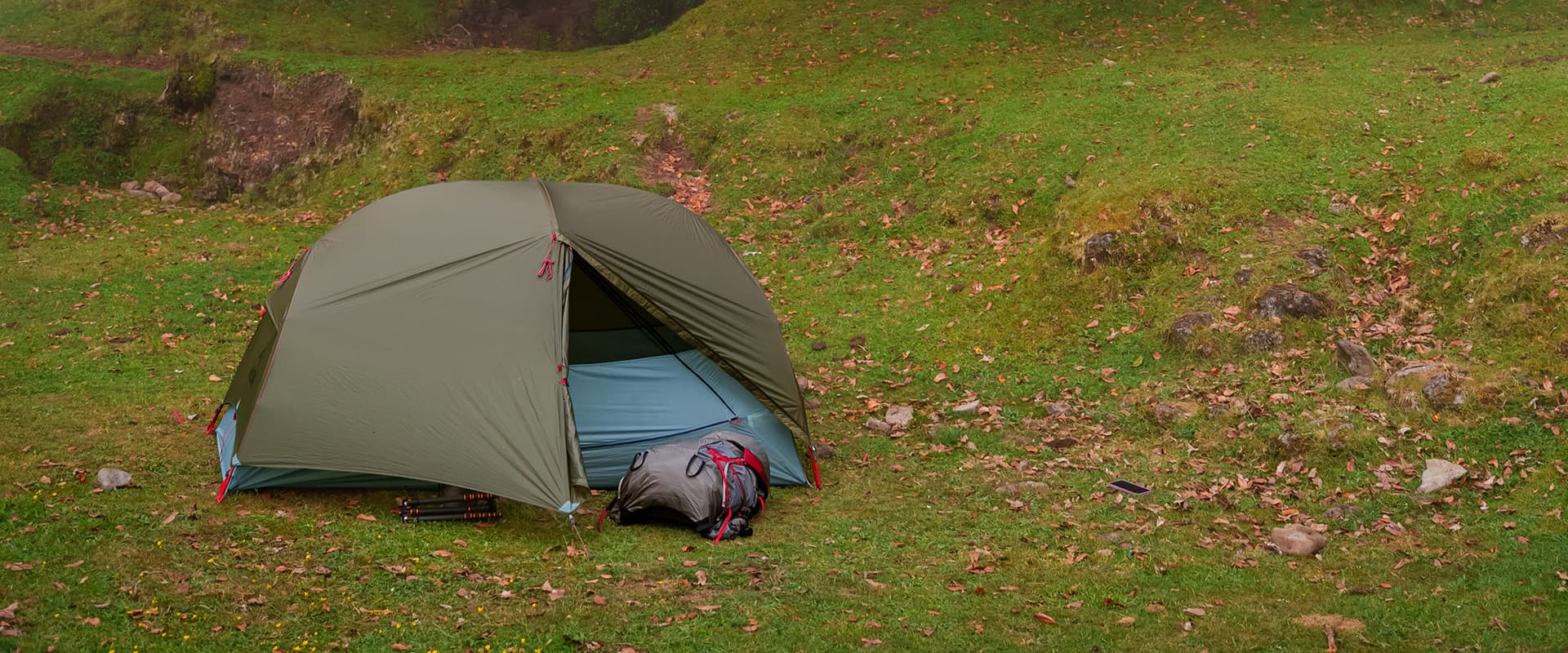
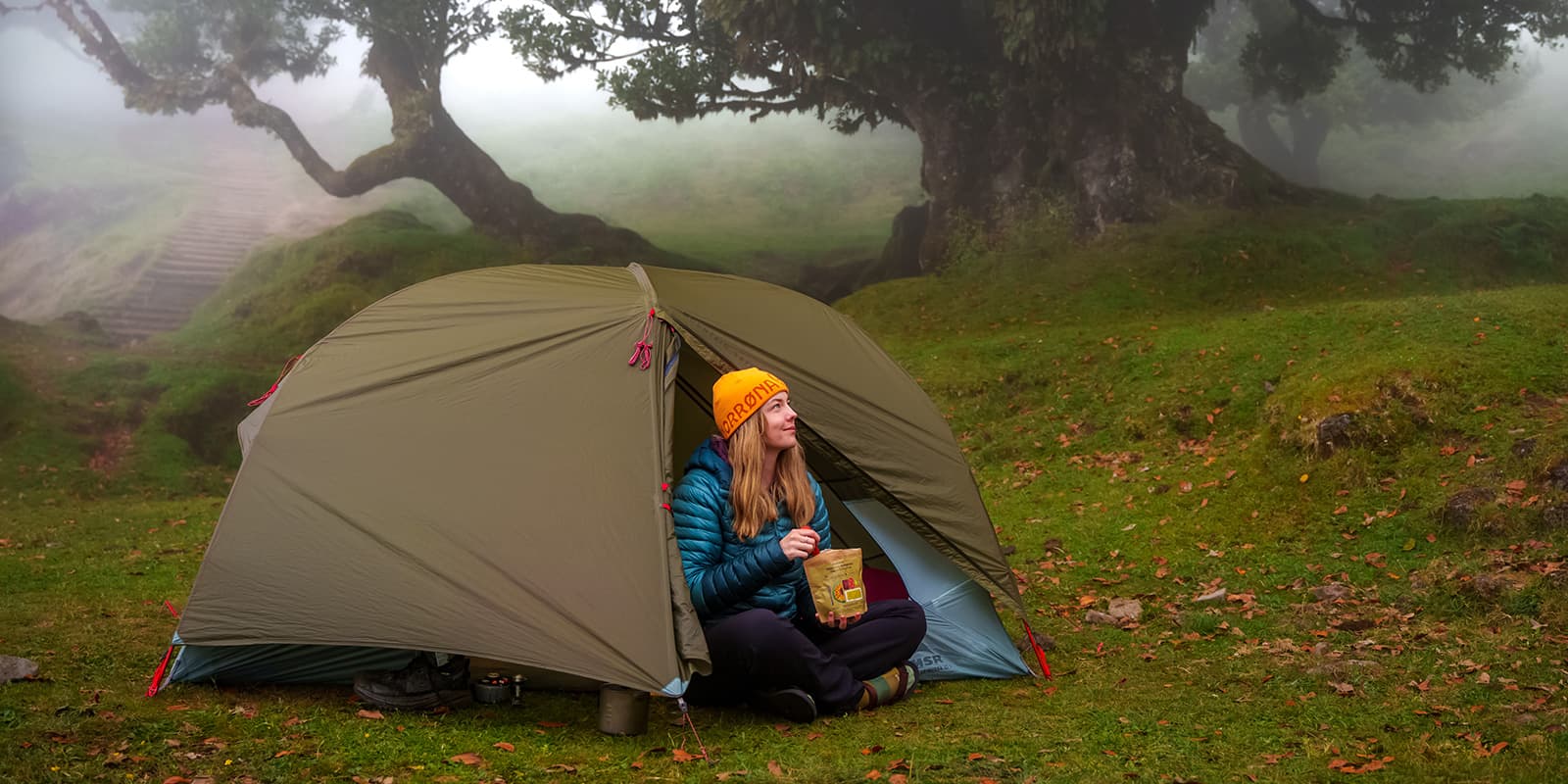
Madeira, Portugal: Pitched in the ancient Fanal Forest, experiencing dense fog and extreme humidity.
Technical Specifications
MSR Hubba Hubba LT 1
Capacity
1 person
Season Rating
3-season
Minimum Weight
1.07 kg
Packed Weight
1.23 kg
Floor Area
1.82 m²
Vestibule Area
0.74 m²
Peak Height
99 cm
Doors / Vestibules
1 Door / 1 Vestibule
Pole System
DAC NFL aluminium
Design
Freestanding
A Quick Buyer’s Note on the MSR HD Version: MSR also offers a “Heavy Duty” (HD) version of this tent. While the HD version shares the exact same layout and freestanding design, it swaps out the LT’s mesh-heavy inner for a solid fabric canopy and ups the waterproof fabric rating. The trade-off is an extra 130 grams in weight. For fast-and-light thru-hiking or dealing with intense humidity like I did in Madeira, the breathability and weight savings of the LT are fantastic. However, if your hikes are predominantly based in cold, fiercely wet climates, the HD is worth keeping on your radar.
Testing the Hubba Hubba LT1
The first thing that stood out to me about the Hubba Hubba LT 1 was how intuitive it is to pitch alone. The single ‘skeleton’ aluminium pole system creates a freestanding structure that takes shape quickly. Once the pole segments are connected and the inner tent is clipped on, the shelter is essentially standing before you even start adjusting the finer details. The setup became quick and familiar after only a few uses, and I never found myself struggling with it in the field.
The Standout Features
One specific piece of hardware on this tent really impressed me, and it’s a design element I haven’t seen on other tents. Instead of using the plastic side-release buckles to connect the rainfly to the corners of the inner tent, MSR uses ultra-minimalist aluminium connector hooks.
You simply slide the metal hooks directly into the webbed loops at the tent corners. This is a brilliant design choice for two reasons:
Durability: Plastic buckles are notorious for snapping and the aluminium hooks are practically indestructible.
Stability: Because it creates a secure metal-on-metal connection, it allows you to get an incredibly taut, stable pitch that refuses to slip or loosen up.
The MSR Groundhog tent stakes also deserve a mention. I don’t usually get particularly excited about tent stakes, but the ones supplied with this tent have easily become my favourite. They are lightweight, exceptionally strong, and held beautifully in a wide variety of ground conditions, from sandy coastal soil to hard dirt.
Space and Liveability
Moving from a two-person tent to a one-person tent was the part of this review I was most curious about. I expected to feel some compromise, and I wondered whether I would miss having extra room to spread out or organise my gear.
Thankfully, that was not the case. The Hubba Hubba LT 1 feels surprisingly spacious inside. The floor layout is practical, and I never felt like I was moving around my own equipment just to find space to sit up. At 5ft 4in, I found more than enough room for my entire sleeping system, my backpack, and my other gear while still allowing me to comfortably change clothes and keep everything organised.
The headroom is another area where the design works exceptionally well. My boyfriend, who is 6ft 3in, also borrowed the tent and was genuinely impressed with the vertical space. He has used tents previously where his head or his sleeping bag constantly shoved against the ends of the inner walls, but he did not experience that with the Hubba Hubba LT 1.
One of my favourite small design features is the elastic bungee cords running across the roof of the inner tent. They are simple but incredibly useful. I ended up using them as an interior washing line after wet hiking days, hanging up my socks, base layers, and damp clothing overnight so they could air out while I slept. On longer backpacking adventures, small features like this make a huge difference because they help keep your living space organised and clear of the floor.
Weather Performance
Over the course of testing, the Hubba Hubba LT 1 experienced some very different atmospheric conditions, allowing me to fully evaluate its structural limits.
Hubba Hubba LT1 wind Performance on the Wild Atlantic Way
The toughest conditions I experienced with the tent were while hiking the Dingle Way on Ireland’s west coast. The Wild Atlantic Way has a justified reputation for dramatic weather, and it quickly became clear why. One evening, I found myself wild camping in winds of around 50 km/h, which is exactly the kind of situation where you appreciate having equipment you can trust.
Once properly pitched and guyed out, the Hubba Hubba LT 1 felt incredibly secure, albeit a little noisy through the night. The rainfly is made from a durable 20-denier ripstop nylon, coated with a 1,200 mm polyurethane layer and a PFAS-free silicone water-repellent finish. Instead of rigidly fighting against the fierce gusts, the tent structure moved naturally with the wind. The frame flexed fluidly to absorb the energy of the gusts, but it never gave me the impression that it was struggling or unstable. More importantly, I felt entirely safe inside. Waking up alone after a coastal storm and finding your tent exactly as you pitched it provides an immense amount of confidence.
Rain Protection in Cornwall
The tent also performed very well during wet conditions in Cornwall. It kept me completely dry through extended periods of rain, with absolutely no issues from water ingress, seam leaks, or moisture seeping up through the floor. It’s also worth noting that I did not use a ground sheet during this hike.
Ventilation and Condensation in Madeira
If I had to choose the one area where the Hubba Hubba LT 1 impressed me the most, it would be its ventilation. Condensation is one of the biggest challenges with lightweight, compact tents, particularly when camping in wet and humid environments.
The Hubba Hubba LT 1 manages airflow exceptionally well. The mesh inner allows plenty of continuous circulation, while the flysheet design creates enough precise separation from the canopy to help reduce moisture build-up.
The absolute best test of this came during my time in the Fanal Forest of Madeira. Fanal is famous for its ancient trees, dramatic fog, and incredibly high humidity. During my stay, it really felt like I was camping inside a cloud. The atmosphere was beautiful, but it was also exactly the kind of environment where I fully expected severe condensation to soak my gear overnight. Remarkably, when I woke up surrounded by thick fog, the inside of the tent remained surprisingly dry. The only noticeable moisture was a very slight dampness on my sleeping bag. Considering the extreme conditions, I was thoroughly impressed.
A Note on Colour and Privacy
One detail I did not expect to appreciate as much as I did was the colour of the rainfly. The muted brown / green fabric blends naturally into most landscapes, which I really liked when wild camping.
As a solo female hiker, feeling comfortable, low-profile, and secure outdoors is incredibly important to me. When you are camping entirely alone, there is always a heightened level of awareness about your surroundings. Having a high-performance tent that doesn’t immediately stand out against the landscape gave me an additional, invaluable sense of privacy and peace of mind on trail.
What Could Be Improved?
While I have been thoroughly impressed with the Hubba Hubba LT 1, no piece of gear is absolutely flawless.
The Tent Peg Count: As I mentioned, the supplied Groundhog stakes are excellent, but there simply are not enough included to utilise the additional guy line ropes for pitching in strong winds. For calm summer nights, this isn’t an issue. But when extreme winds are forecast, you want the peace of mind that comes with fully securing your shelter. I suspect this was a calculated decision by MSR to keep the advertised packed weight as low as possible.
However, considering the premium tier of this tent, including enough stakes to make the shelter fully storm-ready straight out of the box would be a small but worthwhile improvement. If you plan to take this tent into exposed areas, you will want to pick up a few extra aftermarket pegs before you set off.
Final Verdict
The MSR Hubba Hubba LT 1 has been with me through some of my most memorable adventures. It kept me secure through strong winds on the west coast of Ireland, bone-dry through rainy nights in Cornwall, and remarkably comfortable during the intense humidity of Madeira’s Fanal Forest.
It pitched quickly, packed away easily, protected me from challenging weather, and gave me a comfortable, liveable space to look forward to after long days on the trail.
Would I recommend it? Absolutely! The MSR Hubba Hubba LT 1 is not the lightest one-person tent available, nor is it a budget option. But if you are a dedicated backpacker looking for a premium solo tent that beautifully balances weight, comfort, and rugged reliability, I think it is one of the best options on the market.




 Testing Conditions
 Testing the Hubba Hubba LT1

 Hubba Hubba LT1 wind Performance on the Wild Atlantic Way
 Ventilation and Condensation in Madeira
 What Could Be Improved?
 Final Verdict